
The ruling
What did the Court of Appeal decide in St Patrick's International College v HMRC?
Short answer
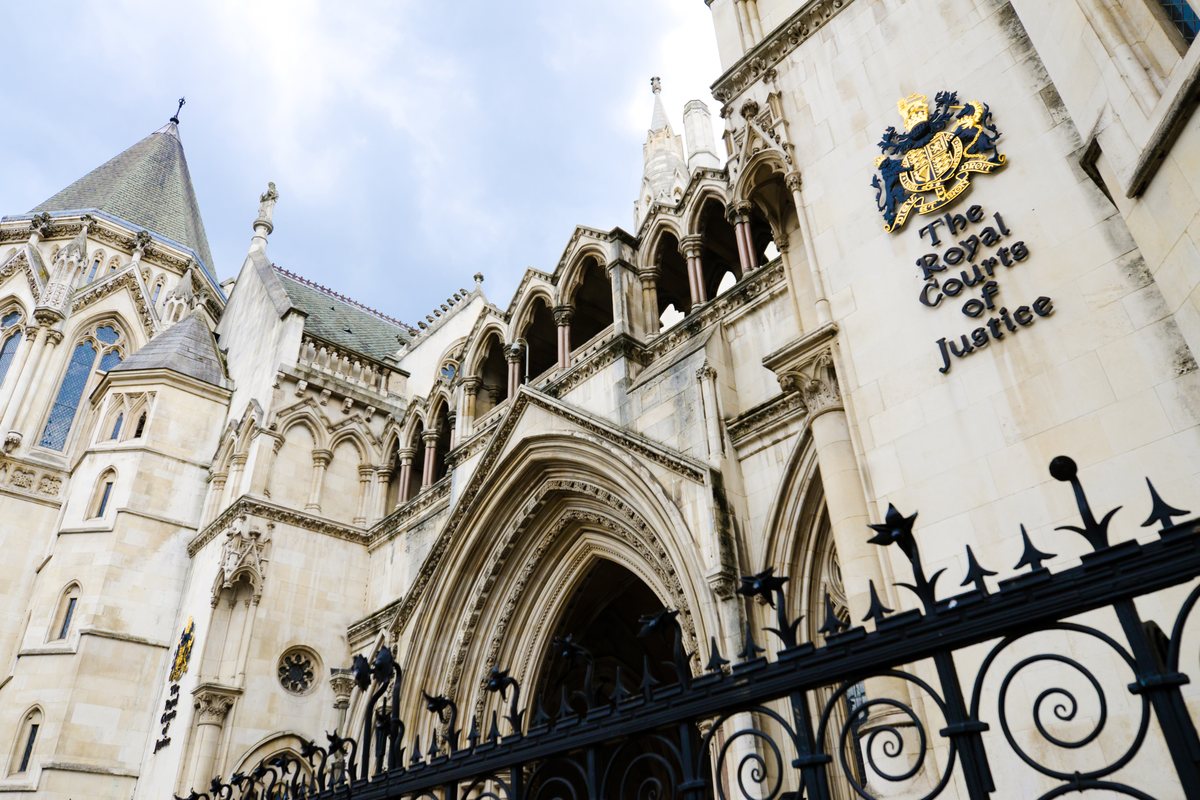
On 6 July 2026 the Court of Appeal held that education supplied by three private colleges was exempt from VAT, even though UK law did not list them as eligible bodies. To their students the courses were the same as courses that universities and further education colleges supply VAT free, so taxing them broke the principle of fiscal neutrality. HMRC has permission to appeal to the Supreme Court.
The colleges
All three were private, profit-making providers with no university title and no degree-awarding powers.
- St Patrick's International College Ltd, a London college supplying Pearson HNCs and HNDs in business management, tourism, hospitality, technology and health and social care.
- London College of Contemporary Arts Ltd, a London provider of foundation courses, HNCs, HNDs, degrees and postgraduate courses in fashion, visual arts, media, business and hospitality, with degrees delivered through partnerships.
- Interactive Manchester Ltd, a Manchester provider of degrees validated by the University of Wales and London Metropolitan University, Pearson HNCs and HNDs, ACCA courses and TEFL.
The appeals covered supplies made between 1 December 2012 and 6 August 2017.
Why they were charged VAT in the first place
UK law exempts education only when an eligible body supplies it. The list in Group 6 of Schedule 9 to the VAT Act 1994 covers schools, universities and their colleges, further education colleges, some public and non-profit bodies and a few others. A commercial college that distributes its profits is not on it, so HMRC's policy is that its course fees carry VAT at 20%.
The colleges argued that EU law, which the UK still applied during those years, required education to be exempt when students would see it as no different from exempt education elsewhere.
How the case got here
- First-tier Tribunal dismissed the appeals, [2023] UKFTT 408 (TC). Judge Jonathan Cannan found the colleges were regulated much more lightly than universities and FE colleges and were not in the same position as them.
- Upper Tribunal dismissed the appeals, [2025] UKUT 101 (TCC). Mr Justice Rajah and Judge Greg Sinfield held that where an exemption depends on who the supplier is, comparability is judged by the legal and regulatory framework rather than by what the typical consumer thinks.
- Court of Appeal allowed the appeals, [2026] EWCA Civ 852. Lord Justice Lewison, Lord Justice Miles and Sir Launcelot Henderson heard the case on 16 and 17 June 2026.
- Supreme Court. HMRC has permission to appeal. We have not seen a hearing date published.
Why the colleges won
The Court of Appeal was bound by one of its own earlier decisions. In Leisure, Independence, Friendship and Enablement Services Ltd v HMRC [2020] EWCA Civ 452, a case about day care for vulnerable adults, it had decided that when you ask whether two suppliers are similar enough that they must be taxed the same way, you look through the eyes of the typical consumer.
Lord Justice Miles, giving the main judgment, held that the same consumer-based test applies even where the exemption has a condition about who the supplier is, and it was common ground that the reasoning applies to education. HMRC did not dispute that, on that test, excluding the colleges broke the principle of fiscal neutrality.
Whether it is right or wrong is not for us to say.
Lord Justice Lewison on the earlier LIFE decision, [2026] EWCA Civ 852 at para 75
Lord Justice Miles also said he saw "considerable force in HMRC's position" on the substance, but the court was not free to depart from its earlier decision. That is a large part of why HMRC is taking the case to the Supreme Court.
What the court did not decide
- Student loans. The tribunals rejected an argument that fees paid through student loans were exempt as publicly funded education. That point was not part of the Court of Appeal hearing.
- Colleges of a university. Having degrees validated by a university did not make Interactive Manchester a college of that university.
- English as a foreign language. The ground about the rule that limits a commercial language school's exemption to its EFL tuition did not need deciding.
- Later periods. The case was about 2012 to 2017. It did not deal with how the law works from 1 January 2024, when the UK stopped letting VAT legislation be set aside for conflicting with EU law.
What it means for other providers
HMRC's Revenue and Customs Brief 9 (2026) says alternative providers who believe they are in the same position as St Patrick's International College can submit a claim for a refund of VAT. The providers most likely to be in that position supply courses that students would see as the same as those at universities and FE colleges, such as HNCs, HNDs, foundation courses and degrees validated by a UK university.
Before you claim, four things need weighing up:
- HMRC's policy has not changed and it is appealing. If it wins, claims are likely to fail and money already repaid could be recovered. See the Supreme Court appeal.
- Claims are for the net amount. Input tax you recovered on costs linked to exempt courses comes off. See input tax and partial exemption.
- HMRC can refuse a refund if your students bore the VAT. See unjust enrichment.
- Only the last four years can be claimed, and periods from 2024 carry extra legal risk. See reclaiming overpaid VAT.
Sources
- St Patrick's International College Ltd & Ors v HMRC [2026] EWCA Civ 852: caselaw.nationalarchives.gov.uk/ewca/civ/2026/852
- Upper Tribunal [2025] UKUT 101 (TCC): caselaw.nationalarchives.gov.uk/ukut/tcc/2025/101
- First-tier Tribunal [2023] UKFTT 408 (TC): caselaw.nationalarchives.gov.uk/ukftt/tc/2023/408
- Leisure, Independence, Friendship and Enablement Services Ltd v HMRC [2020] EWCA Civ 452: caselaw.nationalarchives.gov.uk/ewca/civ/2020/452
- Revenue and Customs Brief 9 (2026): GOV.UK
- VAT Act 1994 Schedule 9 Group 6: legislation.gov.uk